





Home Flying Tumbler Explorer Family A&Q Presented by Ardmore & Quay
Talk to us
Explorer · for families coming home

Leave the name behind, not just the footprints.

Lay down a cask of Irish whiskey in Carlow with your family. Fill it with your own hands, stencil the surname on the head, and sign across it — three generations, one barrel, one day.

Then come back to taste it, to re-cask it, and in ten years to bottle it by hand. A standing reason to keep coming home.

Build your cask See the experiences
52°44′N · 6°52′W LARCH GROVE, CO. CARLOW — 1 HR 15 FROM DUBLIN
What it is

Most families come, look, and go home with a photograph.

You stand in the townland. You find the register, the headstone, the church. It is a good day and then it is over, and what you take home fits on a phone.

This is the version where the family leaves something in the ground instead. A cask in a bond in Co. Carlow with your name stencilled on the head, filled and signed by everyone who came — the cousins who never travel together included.

It cannot be bottled by post. Somebody has to come back for it, and that is the whole point.

The whiskey at the end is the souvenir. The years are the point.

Rooted adventure — the bird always comes home
Your name on the head Three generations One full day
The names

Whose name goes on the head of it.

Fourteen of the old families, where they held land, and the Irish the name came out of. Pick one and the map flies to its heartland. Most American families with a line back here carry one of these — and whichever it is, it gets burned into the cask head and printed on every bottle at the end.

Pick a name to fly there · tap the map to pull back out
{{ fam.name }} {{ fam.irish }} {{ fam.county }}
{{ detailKicker }} {{ detailName }} {{ detailIrish }} {{ detailTerritory }} {{ detailNote }} {{ detailDrive }}
The family tree

Five generations, and one of them gets to sign it.

Every family that comes here has the same shape of tree: one person who left, four generations who never saw the place, and one lot who finally booked the flight. This is where the cask sits on it.

1847
The one who left Walked out of the townland with a name and nothing else. Never came back, and never expected anyone to.
1880–1950
The generations in between Two, three, four of them. The name survives, the townland becomes a story, the story becomes a county and then just “Ireland”.
Today
The ones who booked the flight Grandparents, their children, and the cousins who have never all been in a room together. Fifteen or so, once you count the ones who will actually come.
BOSTON CHICAGO NEW YORK SYDNEY CARLOW
The trip
One cask, and the branch that filled it Everyone who stands in the bond that afternoon signs the head. Ten years later the same names are on the label, with the year they signed it.
Room for every signature The head

The surname is stencilled on before you arrive. The signatures go on in the yard, in whatever order people get to the marker. Anyone who misses the fill day signs it on their first visit.

Eleven signed · one left for whoever comes next

Bring the tree with you if you have one. We keep a copy of it in the cask record, so the label at the end can name the generation that left as well as the one that came back.

The ones who came back

Five famous families, and the day they came home.

Every one of these started the same way: somebody left a townland with nothing and never saw it again. What makes them famous is not the leaving. It is that a generation later, somebody came back to look.

Kennedy
Dunganstown, Co. Wexford
LEFT 1848 CAME BACK June 1963

Patrick Kennedy, a cooper, left the family holding at Dunganstown in the famine year of 1848 and died of cholera in Boston nine years later, having never gone home.

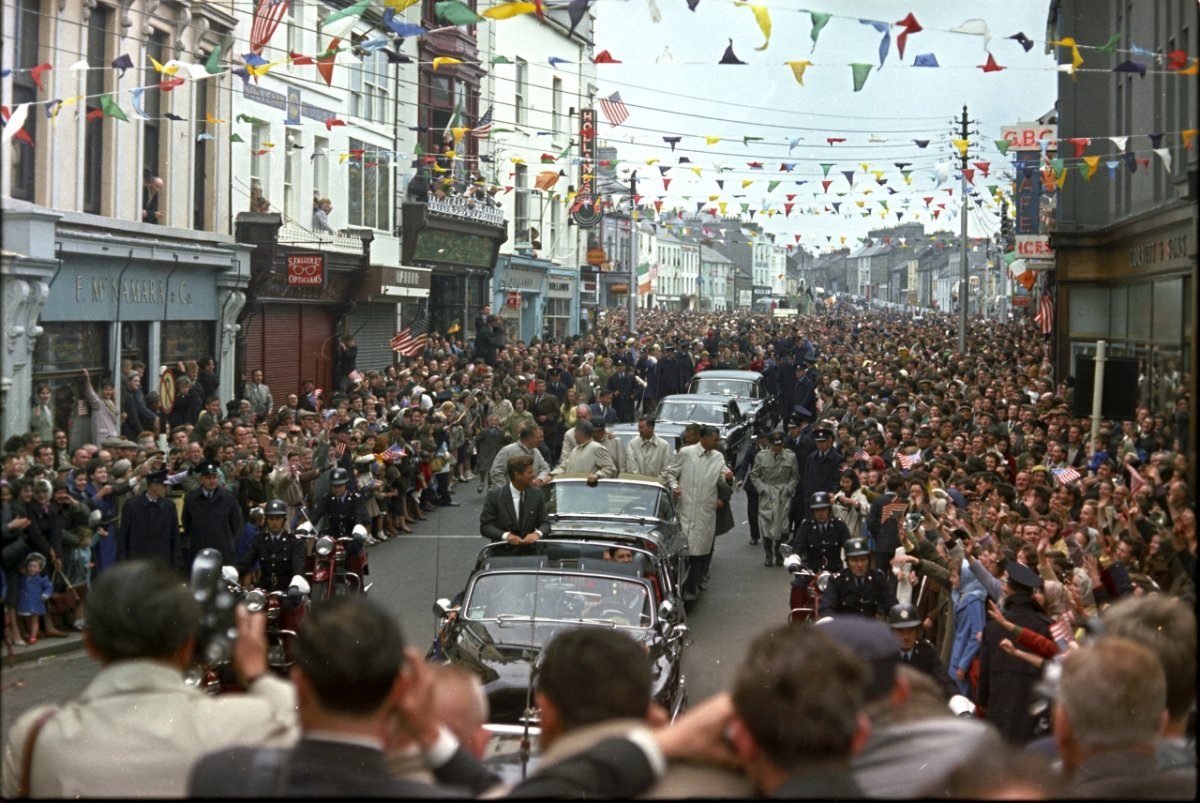
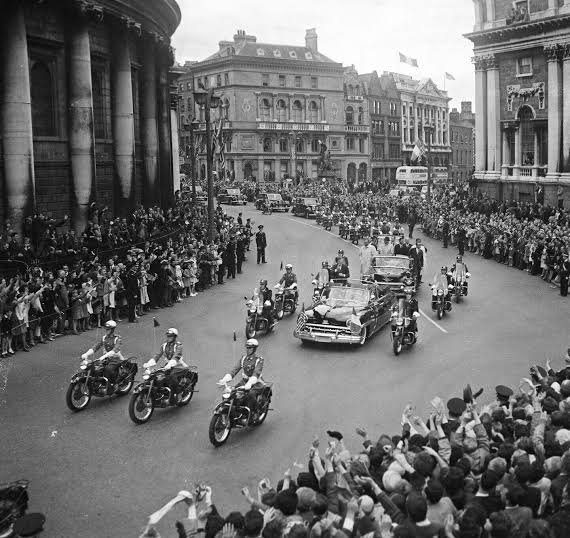
His great-grandson, then President of the United States, drove up the same lane in June 1963 and had tea with his cousin Mary Ryan in the farmyard. He told the crowd he would come back in the spring of 1964. He was dead within five months.

The most famous homecoming in Irish-American history lasted an afternoon. The generation after it has been coming back ever since.
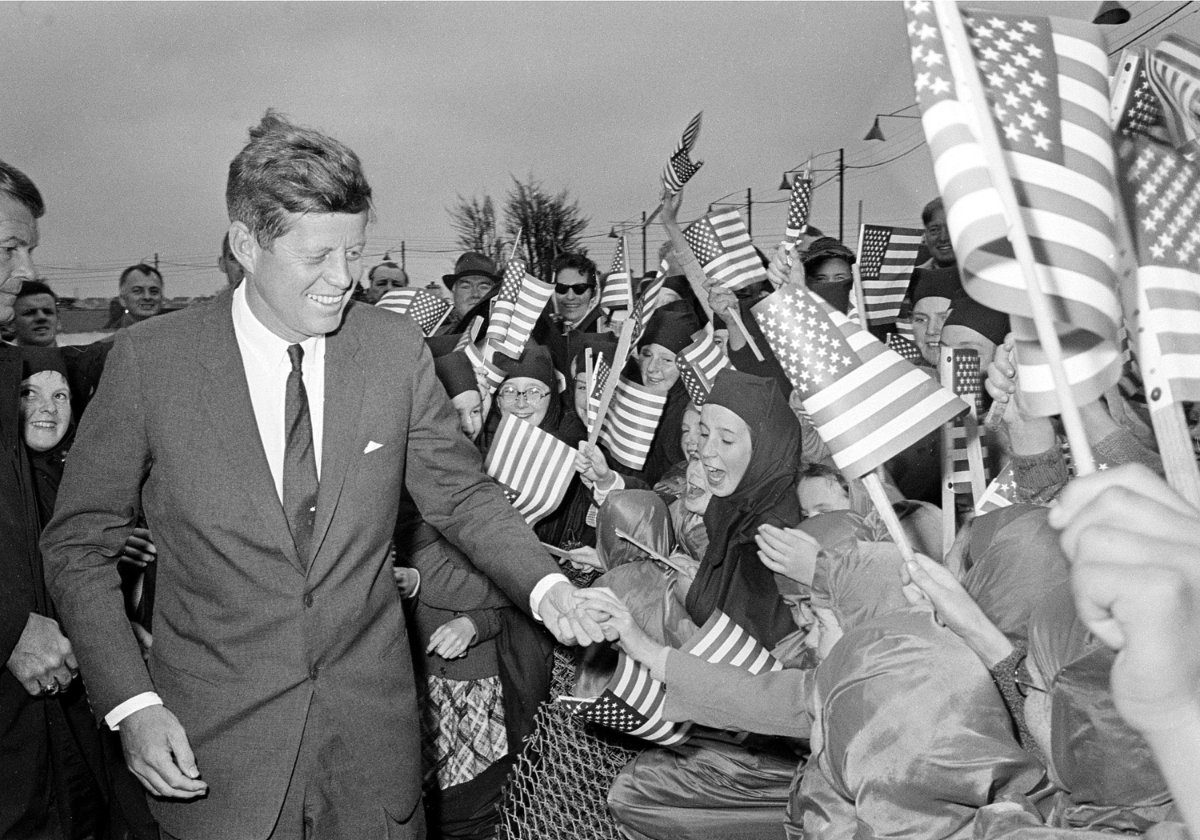
Working the fence line, June 1963
The hands and the flags
Working the fence line, June 1963
The motorcade through the main street
A town under bunting
The motorcade through the main street
Four days, and the country stopped
Dublin, College Green
Four days, and the country stopped
ARCHIVAL PRESS PHOTOGRAPHY · THE 1963 VISIT
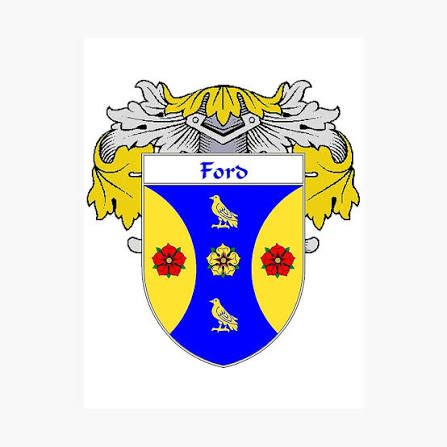
Ford
Ballinascarty, Co. Cork
LEFT 1847 CAME BACK 1917

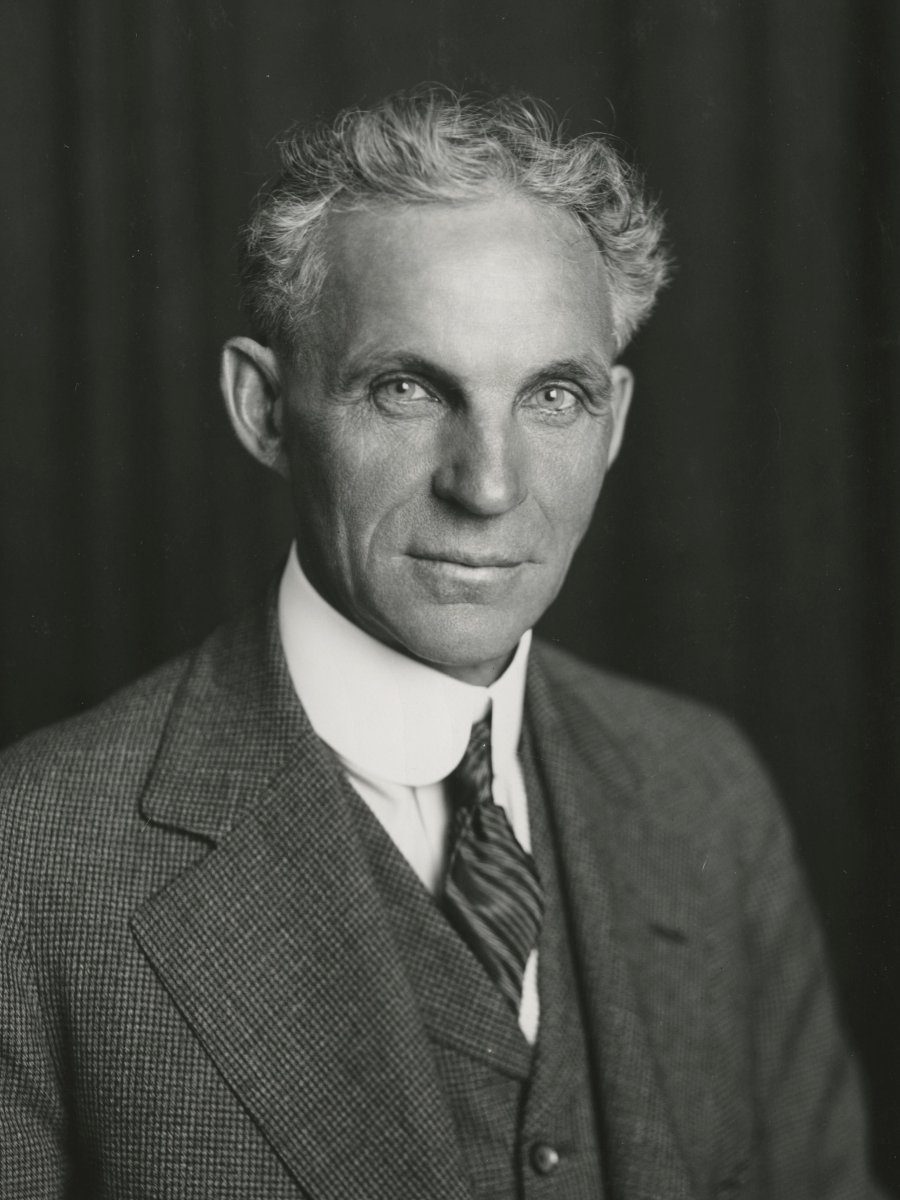
William Ford left west Cork in 1847, the worst year of the famine, and ended up farming in Michigan.

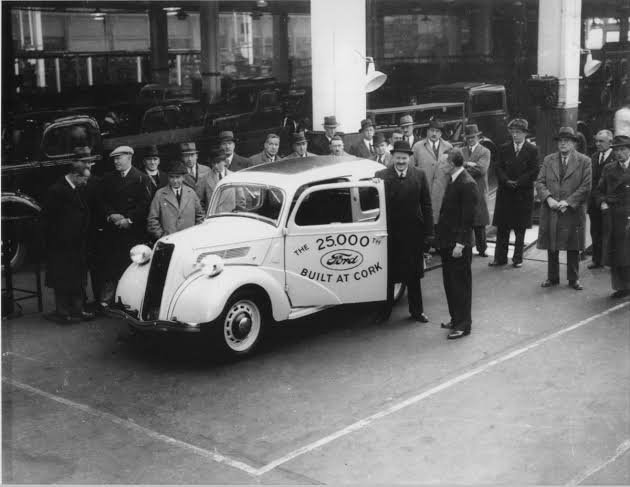
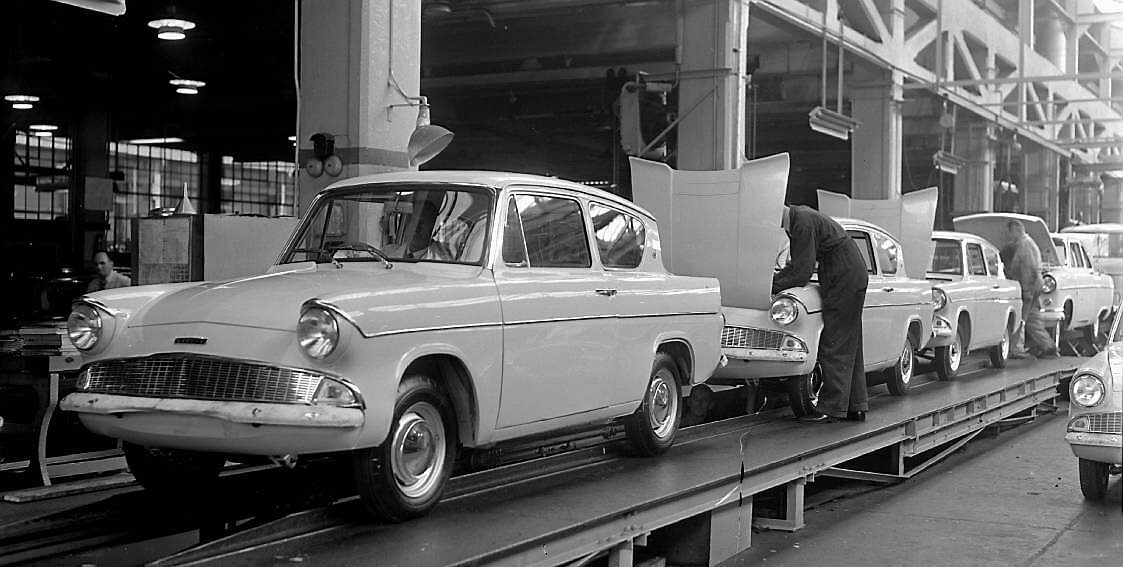
His son Henry came back with a factory. Ford opened a plant on the Cork marina in 1917 — the first purpose-built Ford works outside North America — on the ground his father had walked away from.

Some people come home with a photograph. He came home and built something that employed the parish for seventy years.

Son of a Ballinascarty emigrant
Henry Ford
Son of a Ballinascarty emigrant
Painted on the door, driven off the line
The 25,000th built at Cork
Painted on the door, driven off the line
Cars coming off the marina works
The Cork assembly line
Cars coming off the marina works
ARCHIVAL PHOTOGRAPHY · FORD AT CORK, FROM 1917
Kelly
Drumirla, Newport, Co. Mayo
LEFT 1880s CAME BACK 1961

John Henry Kelly left a stone cottage above Newport in the 1880s and went to Philadelphia, where the family made bricks and then made money.

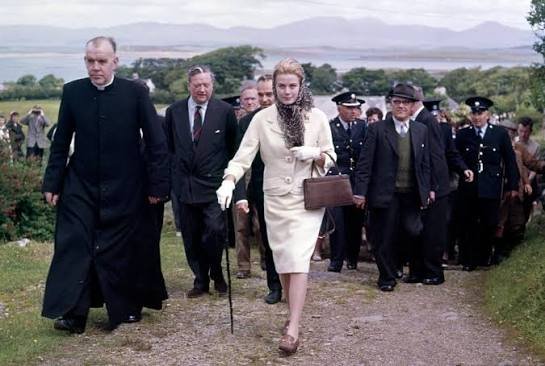
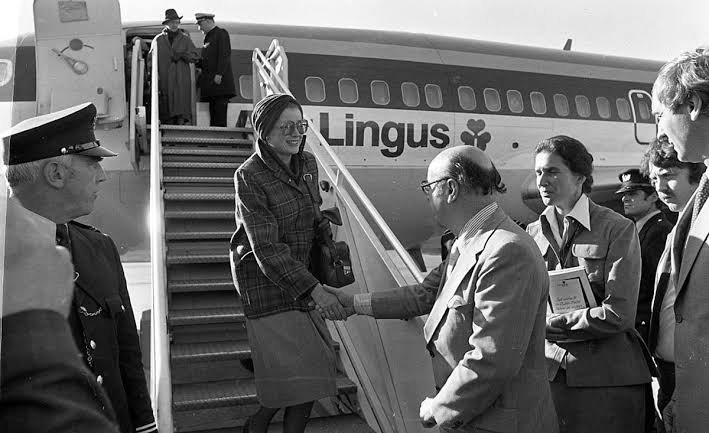
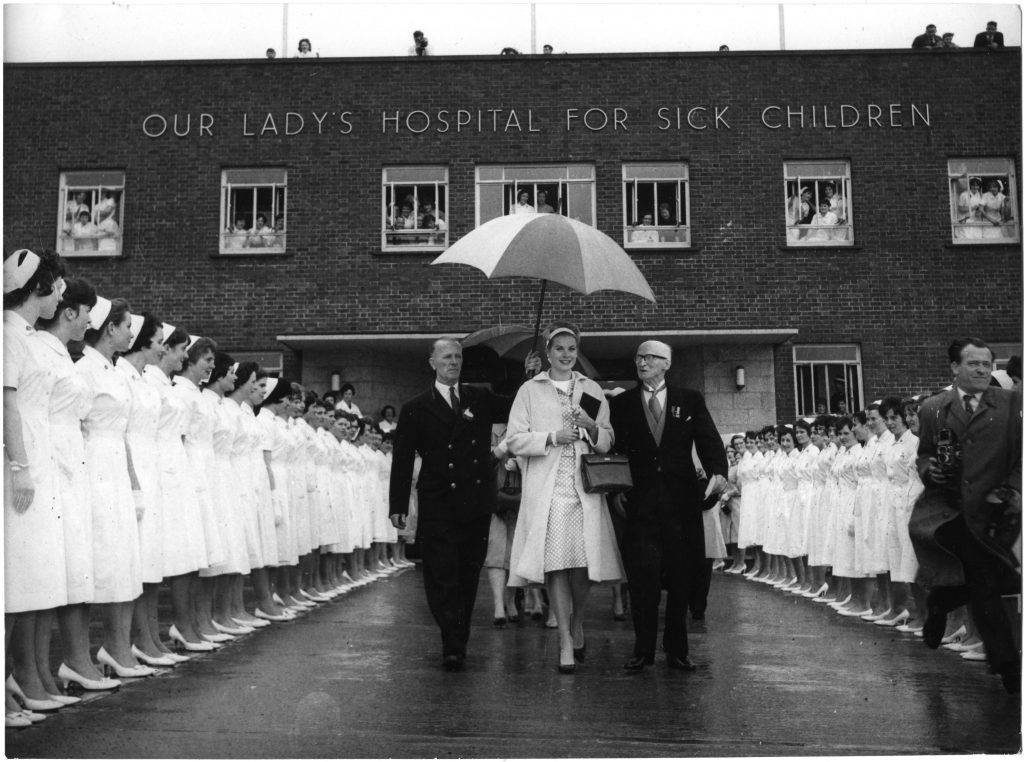
His granddaughter Grace, by then Princess of Monaco, came to see the cottage in 1961. The walls were still standing. She stood in the doorway her grandfather had left through.

The cottage is a heritage site now. It only became one because somebody in the third generation came looking.

Walking up to the homeplace
Newport, Co. Mayo, with Clew Bay behind
Off the Aer Lingus steps
Arriving into Ireland
Under an umbrella in the rain
Our Lady’s Hospital for Sick Children, Dublin
ARCHIVAL PRESS PHOTOGRAPHY · THE MAYO VISITS
Grady
Turnpike Road, Ennis, Co. Clare
LEFT 1860s CAME BACK September 2009

Abe Grady left Turnpike Road in Ennis in the 1860s, sailed out of Cappa in Kilrush, and settled in Kentucky, where he married a freed slave.

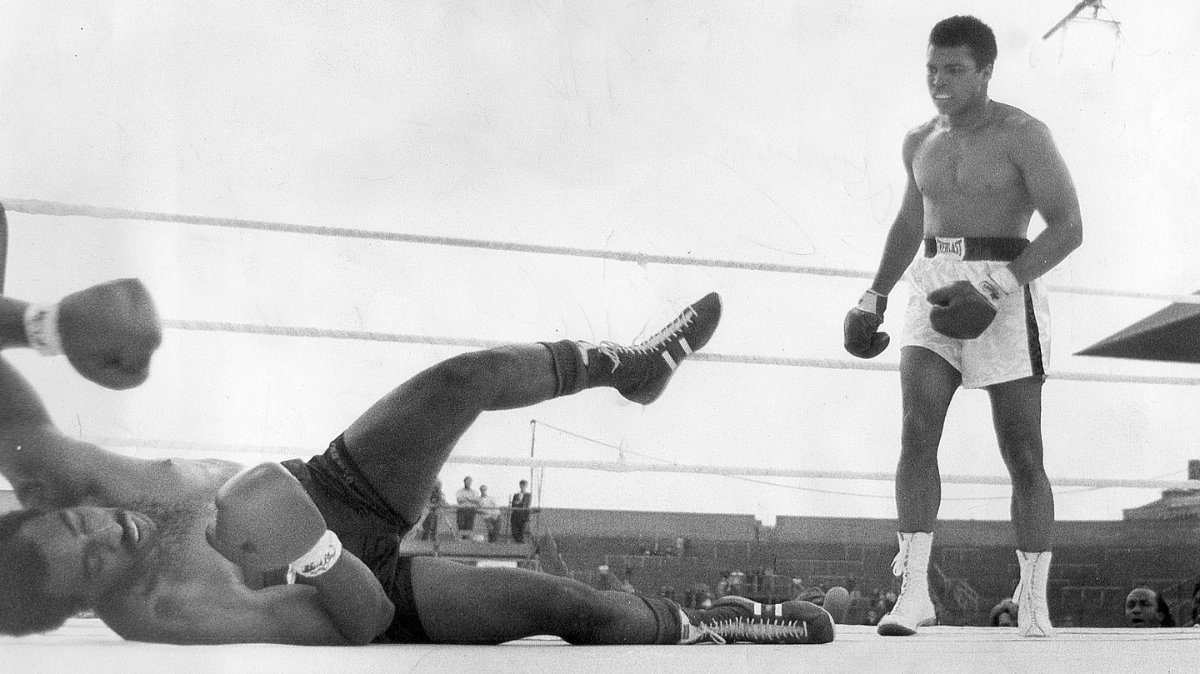
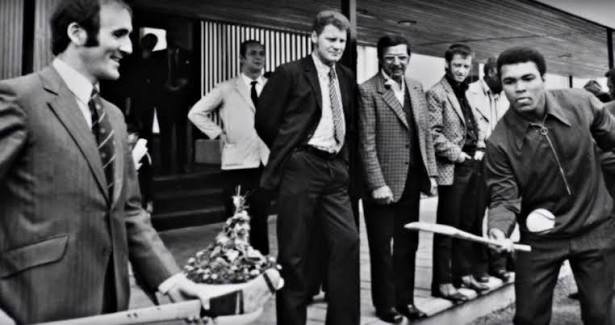
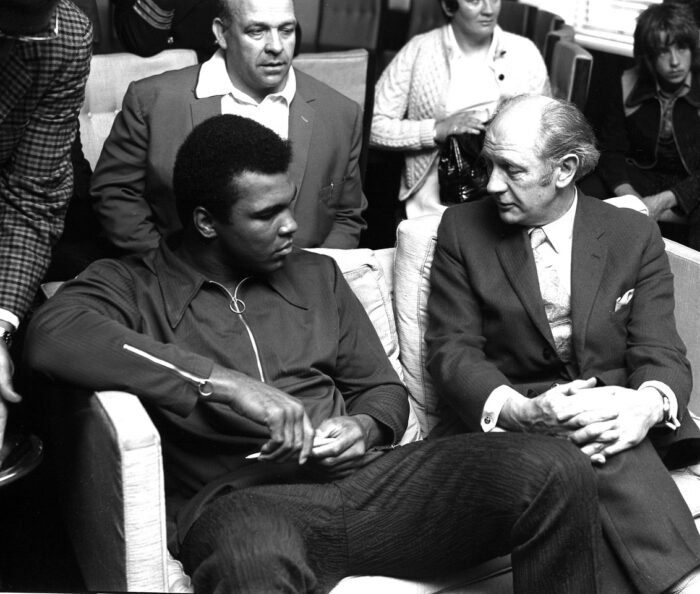
His great-grandson, Muhammad Ali, boxed at Croke Park in 1972 without ever getting to Clare. He finally made it to Ennis in 2009, and was made the first honorary freeman of the town. Fifteen thousand people stood in the square to watch it on a screen. A cousin, Imelda O’Grady, met him at the door of the chamber.

Four generations, two continents and a name nobody in Ennis had thought about in a century. The town has not stopped talking about the day since.

Croke Park, July 1972
Al ‘Blue’ Lewis on the canvas, Dublin watching
Handed a hurley
Handed a hurley
First trip, and the locals testing him
Sat down with the state
Received on the same 1972 visit
ARCHIVAL PRESS PHOTOGRAPHY · IRELAND, 1972 — THIRTY-SEVEN YEARS BEFORE ENNIS
Reagan
Ballyporeen, Co. Tipperary
LEFT 1850s CAME BACK June 1984

Michael Reagan, a soap maker’s son, was baptised in Ballyporeen and left for London and then Illinois in the 1850s.

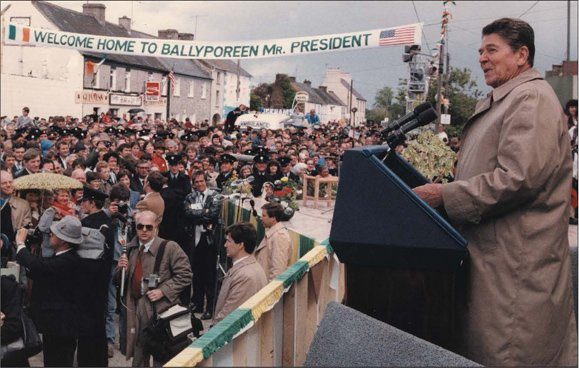
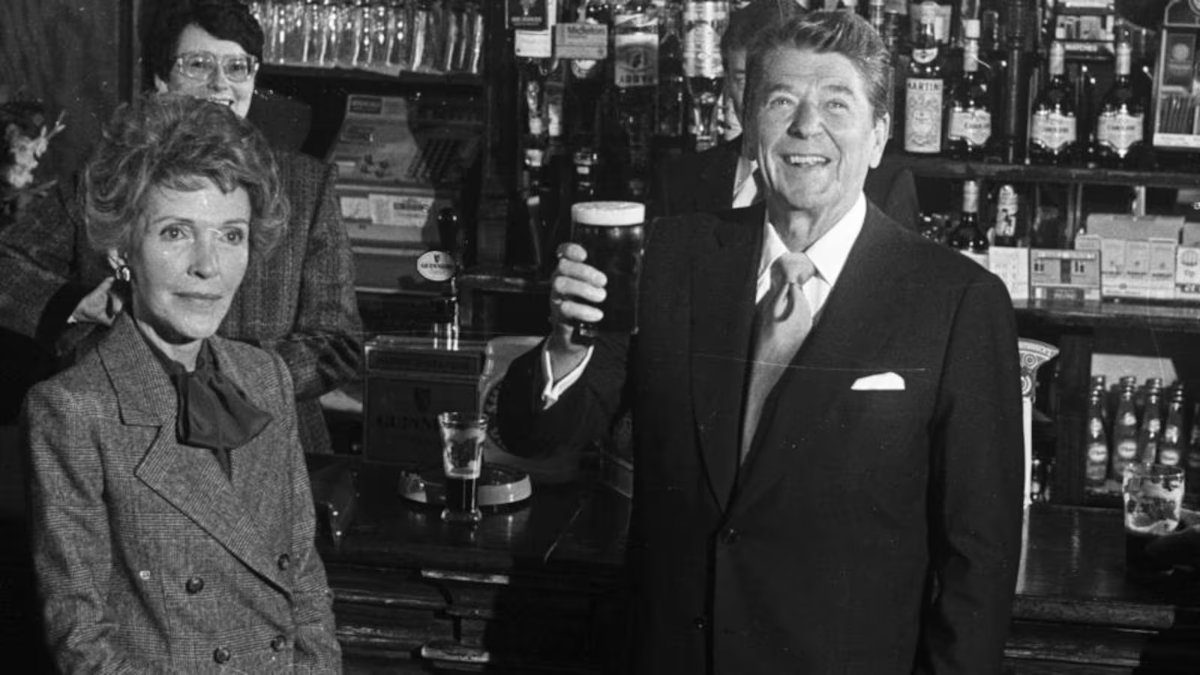
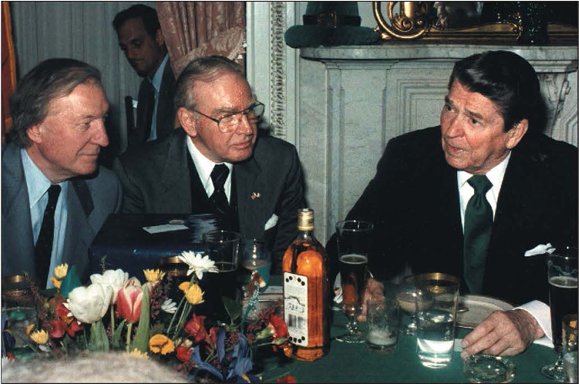
His great-great-grandson arrived in a motorcade in June 1984, found his own family’s baptismal entry in the parish register, and drank a pint in the village bar. When the bar closed, the whole interior was shipped to California and rebuilt inside his presidential library.

He wanted the room, not the souvenir. Given the choice, most families want the thing that stays where it belongs.

‘Welcome home to Ballyporeen’
The village, June 1984
A pint in the village bar
The room that ended up in California
A bottle on the table
State dinner, the same visit
ARCHIVAL PRESS PHOTOGRAPHY · THE 1984 VISIT

Every one of these was a visit

A day in a farmyard, a pint in a bar, a look at a wall. None of them left anything behind that gave the next generation a reason to follow. A cask does exactly that — a family name in a Carlow bond, with a date on it, and a bottling day the grandchildren have to travel for.

Put a name on a cask

Historical illustrations of the Irish-American return, drawn from the public record. No affiliation with, or endorsement by, any of these families or estates is implied.

The week around it

Nobody flies to Ireland for one day.

The cask day is one day of it. Your travel partner builds the other six around it — the parish, the archives, the beds, the coast road and the long table at the end.

Larch Grove is an hour and a quarter from Dublin, forty minutes from Kilkenny and twenty from Borris, so the cask day drops into an east or south-east week without costing you a day. Drive times approximate, from the bond.

DAY 1Land in Dublin, drive south. Dinner in Kilkenny. DAY 2The parish. The register, the graveyard, the house if it is still standing. DAY 3The Lay-Down at Larch Grove — hosted by us. Fill it, sign it, first taste in the yard. DAY 4Borris House or Ballyfin. The long table, the whole family at it. DAY 5–7West or south — Moher, Kinsale, Glendalough. Fly home from Dublin or Shannon.

ONE ILLUSTRATIVE SHAPE · YOUR PARTNER BUILDS THE REAL ONE

Home groundBorris HouseTwenty minutes from the bond. Long table, big house.
Home groundBallyfin DemesneThe one nobody in the family will stop talking about.
Wild AtlanticCliffs of MoherTwo hours forty-five, and worth every minute.
Rebel coastKinsaleOysters, harbour, the drive down through Cork.